
Stripe api boilerplates
API boilerplates ship the foundation — routing, validation, auth, docs — for REST, GraphQL, or tRPC APIs. Filtered to Stripe listings only — 6 match. Stripe listings handle the payments plumbing — checkout, subscriptions, customer portal, and webhook verification — so you can charge users on day one.
6 quality-scored listings.

by Milvydas1 · Boilerplate
Next.jsTypeScriptTailwind CSSPrisma+1
$99


by CodeCudos Demo · Boilerplate
Next.jsTypeScriptTailwind CSSPrisma+2
$89
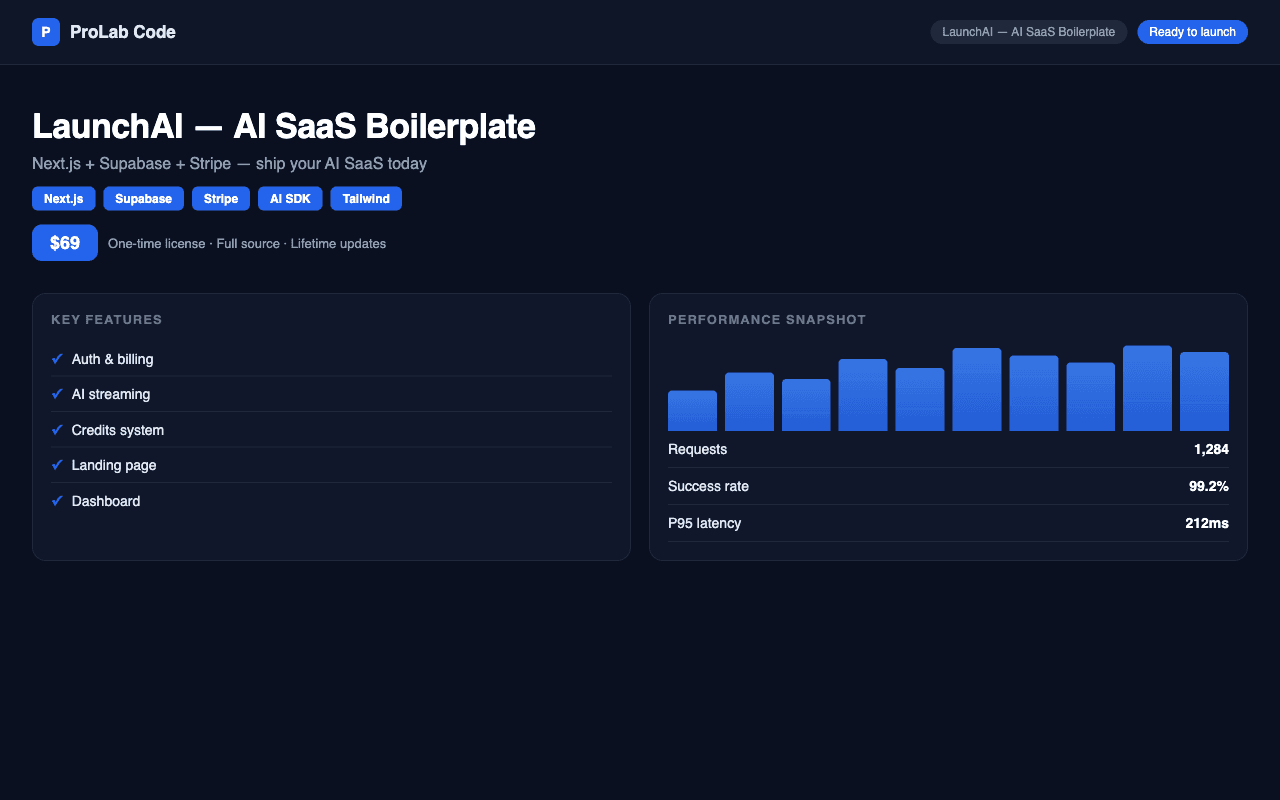
B89
by PROLAB® · Full App
OpenAIReactNext.jsTypeScript+2
$69
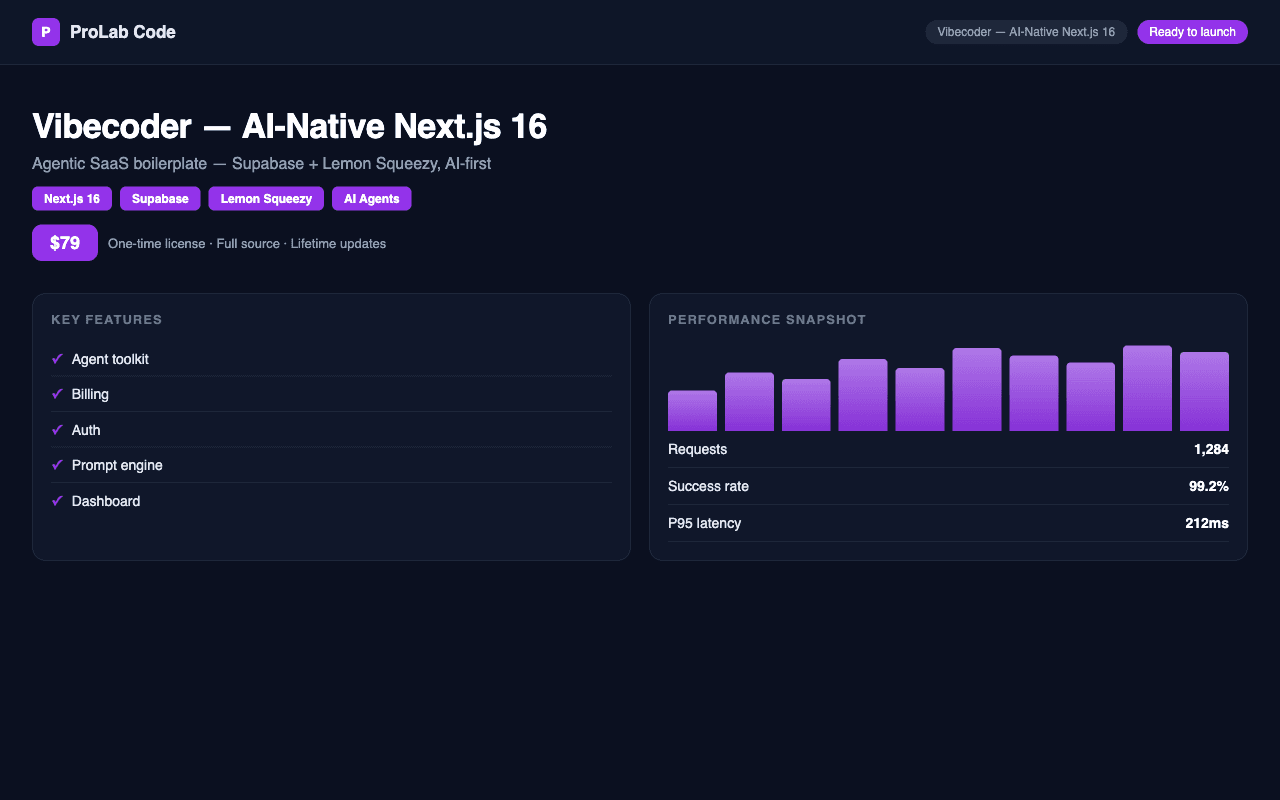
B88
by PROLAB® · Boilerplate
ReactNext.jsTypeScriptSupabase+1
$79
Picking Stripe for api boilerplates
Quality API listings document their request/response shapes (OpenAPI for REST, schema for GraphQL, Zod for tRPC), include authentication middleware, and ship with example tests. For high-throughput APIs, prefer Fastify or Hono over Express; for edge deployment, prefer Hono. For the Stripe subset specifically, the strongest listings target current Stripe versions, ship with TypeScript types where applicable, and document any framework-specific gotchas (deployment adapters, runtime requirements, etc.). Check the quality score and the listing's stack tags before buying — a "Stripe" tag confirms it works in the Stripe ecosystem natively.
Frequently asked questions
Why pick a Stripe-based api boilerplate?▾
Stripe is the most-traded stack on CodeCudos for api boilerplates. Picking a Stripe-based listing means the code drops into your existing Stripe project without framework-level rewrites — and the ecosystem of complementary libraries (auth, payments, ORM) is mature and well-documented.
REST or tRPC?▾
tRPC if your clients are all TypeScript and you control them. REST if you need a public API or polyglot clients. GraphQL if your clients query complex relational data.
Are webhooks handled securely?▾
Quality listings verify Stripe webhook signatures on every event. If the listing doesn't show stripe.webhooks.constructEvent, treat it as insecure.
How does the 14-day refund work?▾
Request a refund within 14 days from your dashboard. We'll approve refunds when the code doesn't match the listing description or has critical bugs that prevent normal use.