

Next.js e-commerce stores
E-commerce templates ship the storefront, cart, checkout, and order management — everything you need to start selling on day one. Filtered to Next.js listings only — 6 match. Next.js is the default full-stack React framework — and the most common foundation for SaaS boilerplates, dashboards, and content sites on CodeCudos.
6 quality-scored listings.
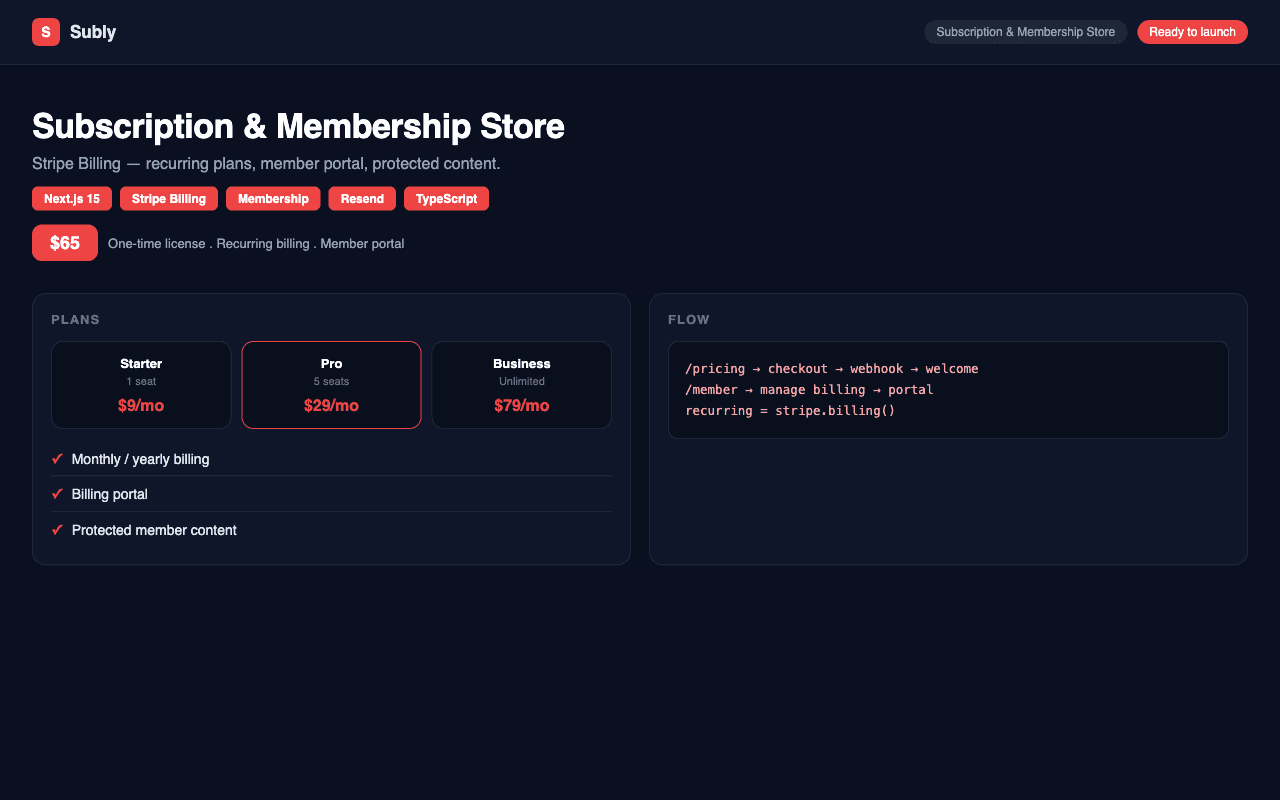
A92
by PROLAB® · E-CommerceVerified
ReactNext.jsTypeScriptTailwind CSS+1
$65
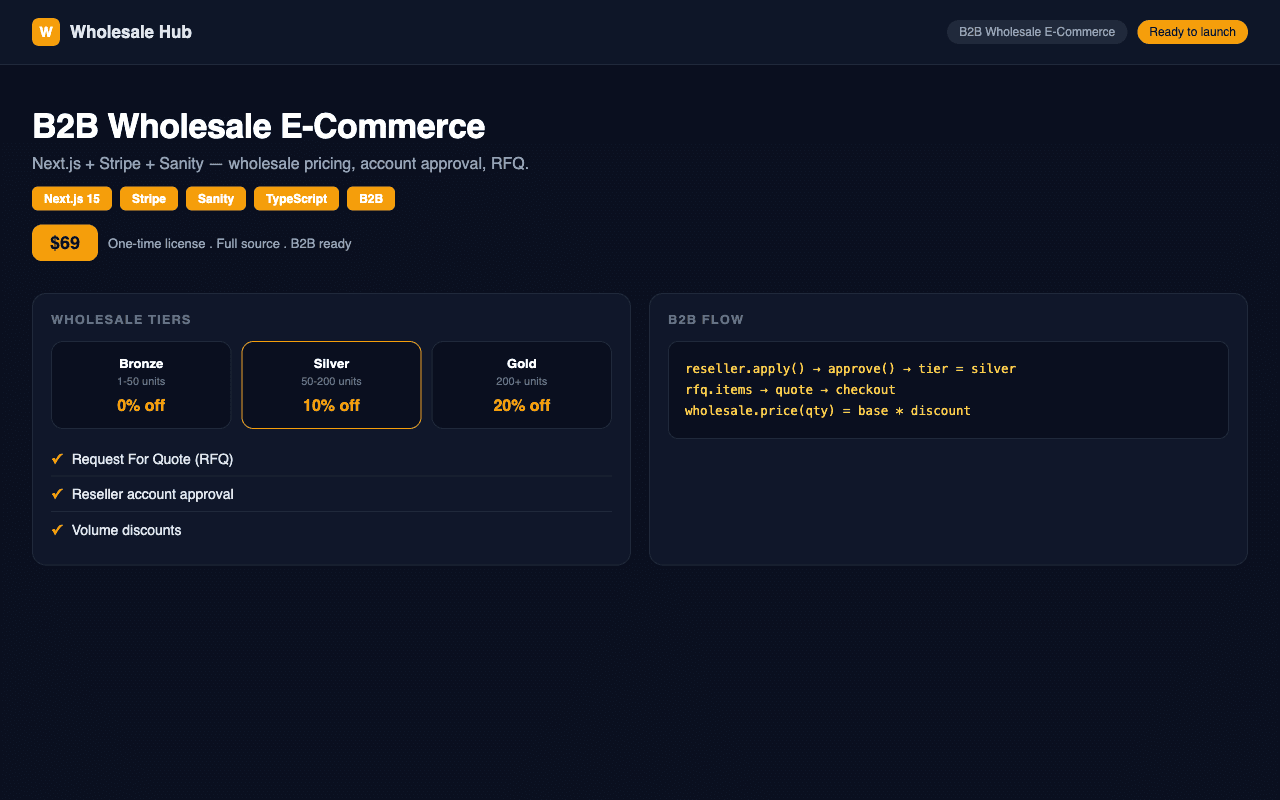
A90
by PROLAB® · E-CommerceVerified
ReactNext.jsTypeScriptTailwind CSS+1
$69
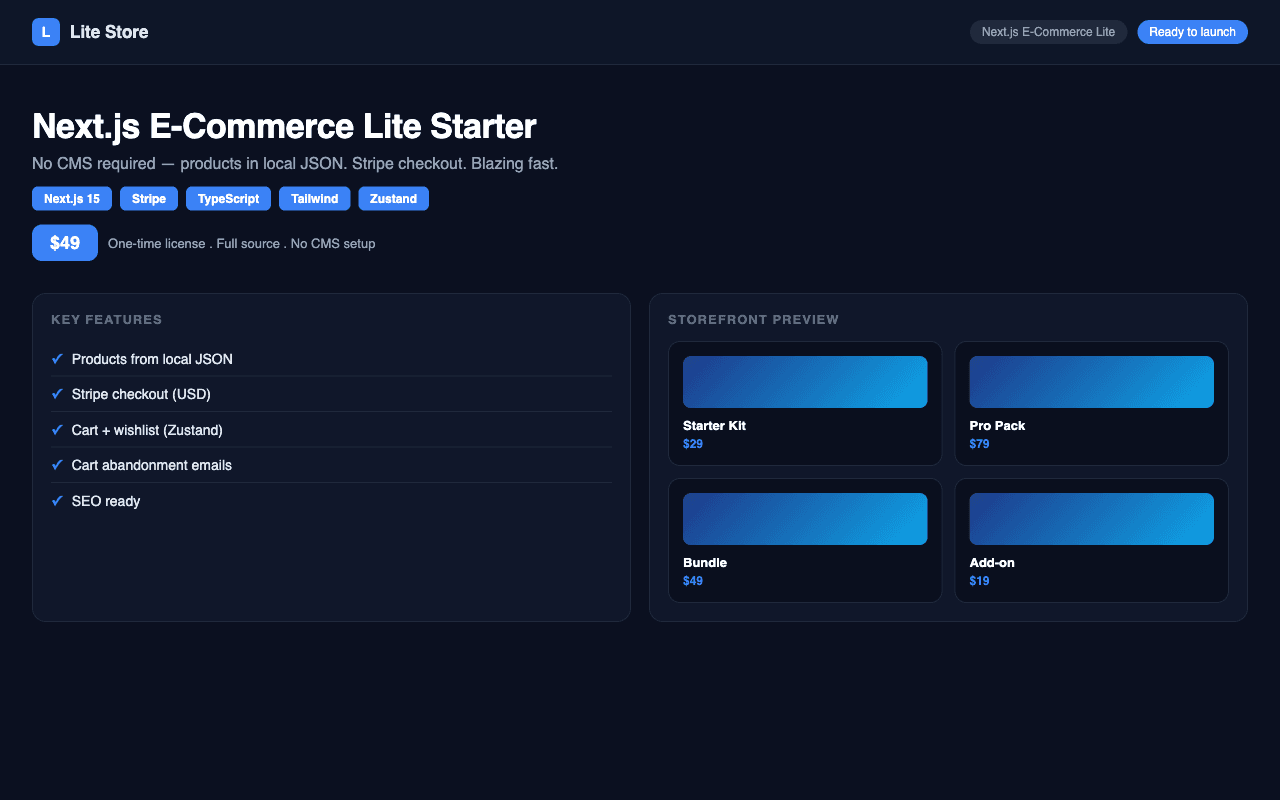
A90
by PROLAB® · E-CommerceVerified
ReactNext.jsTypeScriptTailwind CSS+1
$49
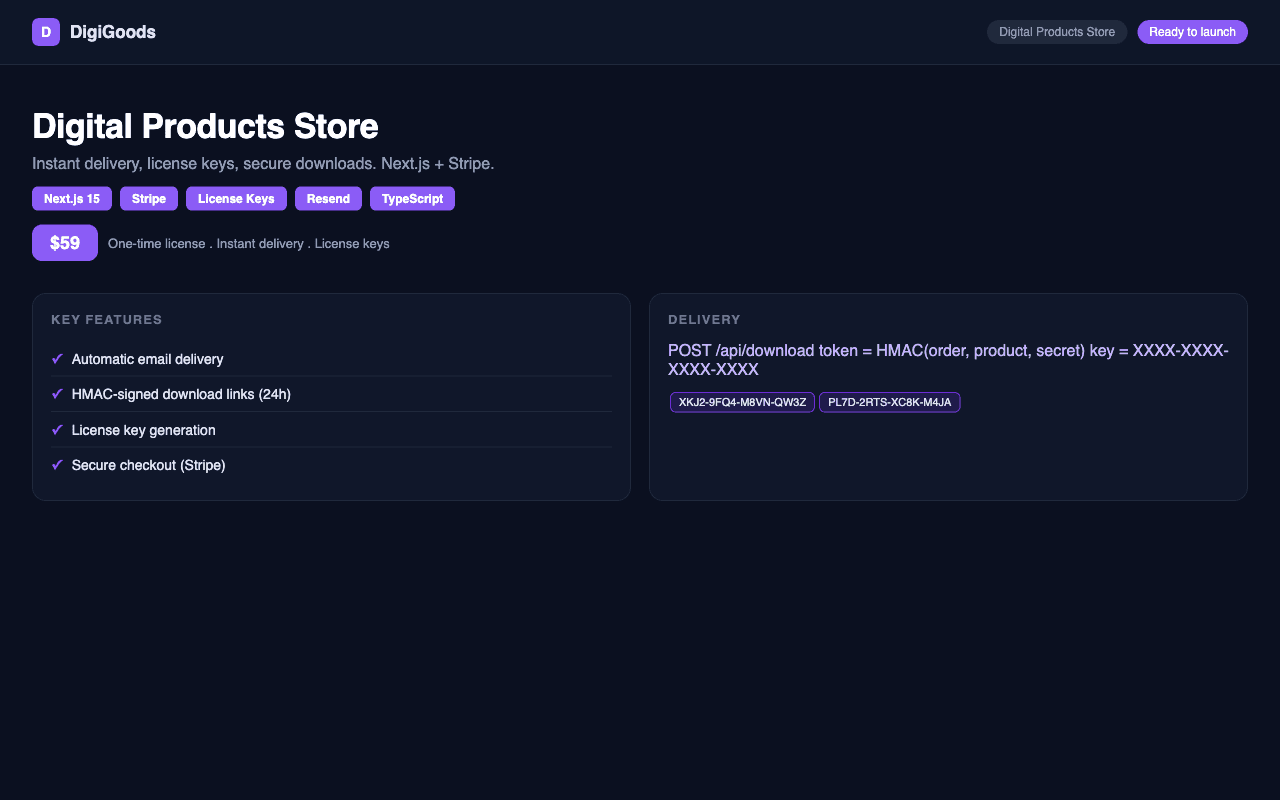
B88
by PROLAB® · E-Commerce
ReactNext.jsTypeScriptNode.js+1
$59
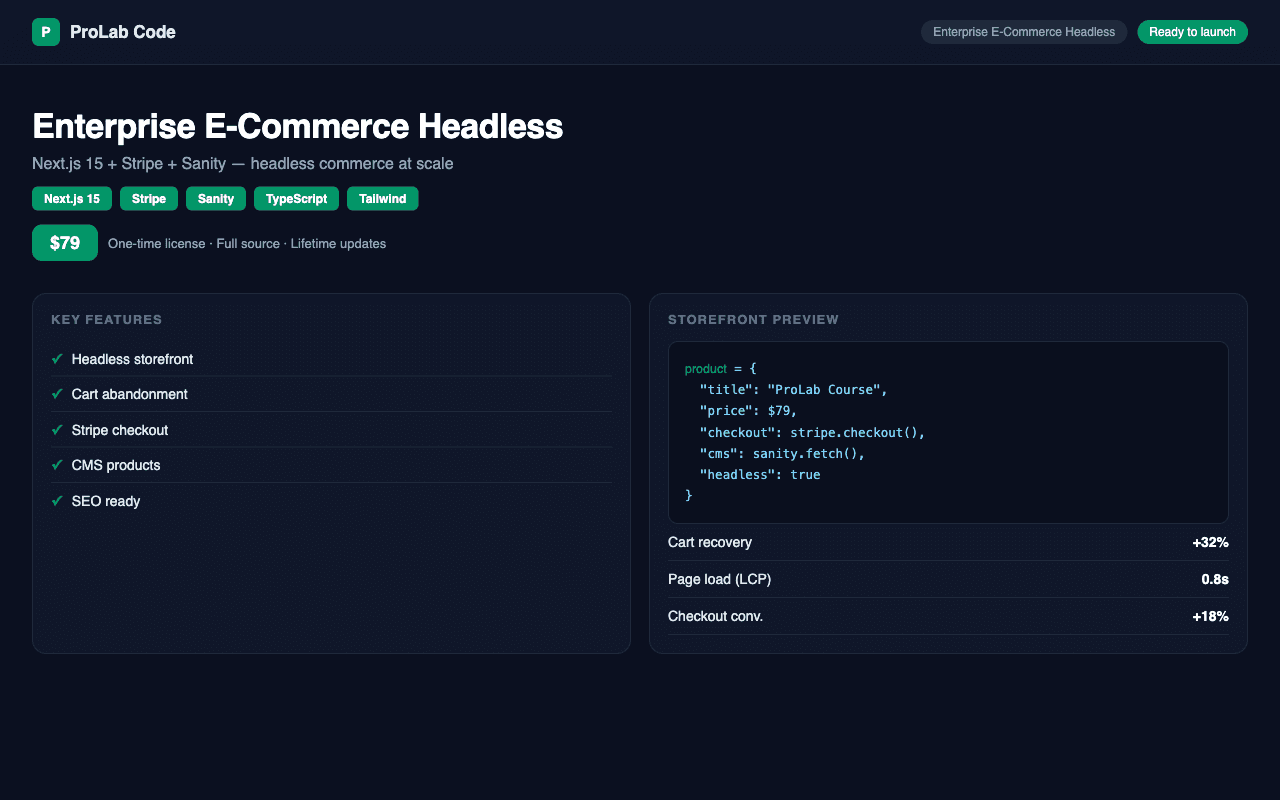
B86
by PROLAB® · E-Commerce
ReactNext.jsTypeScriptTailwind CSS+1
$79
Picking Next.js for e-commerce stores
Quality e-commerce listings handle Stripe webhooks correctly (the most-broken part of any tutorial), include inventory management, ship order-status emails, and protect against common attack vectors like CSRF and exposed API keys. The 14-day refund on CodeCudos lets you audit the code risk-free. For the Next.js subset specifically, the strongest listings target current Next.js versions, ship with TypeScript types where applicable, and document any framework-specific gotchas (deployment adapters, runtime requirements, etc.). Check the quality score and the listing's stack tags before buying — a "Next.js" tag confirms it works in the Next.js ecosystem natively.
Frequently asked questions
Why pick a Next.js-based e-commerce store?▾
Next.js is the most-traded stack on CodeCudos for e-commerce stores. Picking a Next.js-based listing means the code drops into your existing Next.js project without framework-level rewrites — and the ecosystem of complementary libraries (auth, payments, ORM) is mature and well-documented.
Are listings PCI compliant?▾
Listings that use Stripe Checkout or Elements inherit Stripe's PCI compliance — you don't store card data. Custom card forms are a hard pass for production.
Stripe, Shopify, or Polar?▾
Most modern templates use Stripe. Shopify listings exist for headless storefronts. Polar is increasingly common for digital-only sellers.
App Router or Pages Router?▾
App Router is the current default. New listings should target App Router with server components. Pages Router listings work but are on the legacy side of the curve.
Do Next.js listings include authentication?▾
Most full-stack boilerplates do — typically NextAuth, Auth.js (the rename), or Clerk. Component-only listings usually don't.
How does the 14-day refund work?▾
Request a refund within 14 days from your dashboard. We'll approve refunds when the code doesn't match the listing description or has critical bugs that prevent normal use.