

Stripe next.js boilerplates
A Next.js boilerplate gives you the App Router configuration, TypeScript setup, authentication, and database layer already wired — so you start on your feature, not your infrastructure. Filtered to Stripe listings only — 5 match. Stripe listings handle the payments plumbing — checkout, subscriptions, customer portal, and webhook verification — so you can charge users on day one.
5 quality-scored listings.

by Milvydas1 · Boilerplate
Next.jsTypeScriptTailwind CSSPrisma+1
$99


by CodeCudos Demo · Boilerplate
Next.jsTypeScriptTailwind CSSPrisma+2
$89
B88
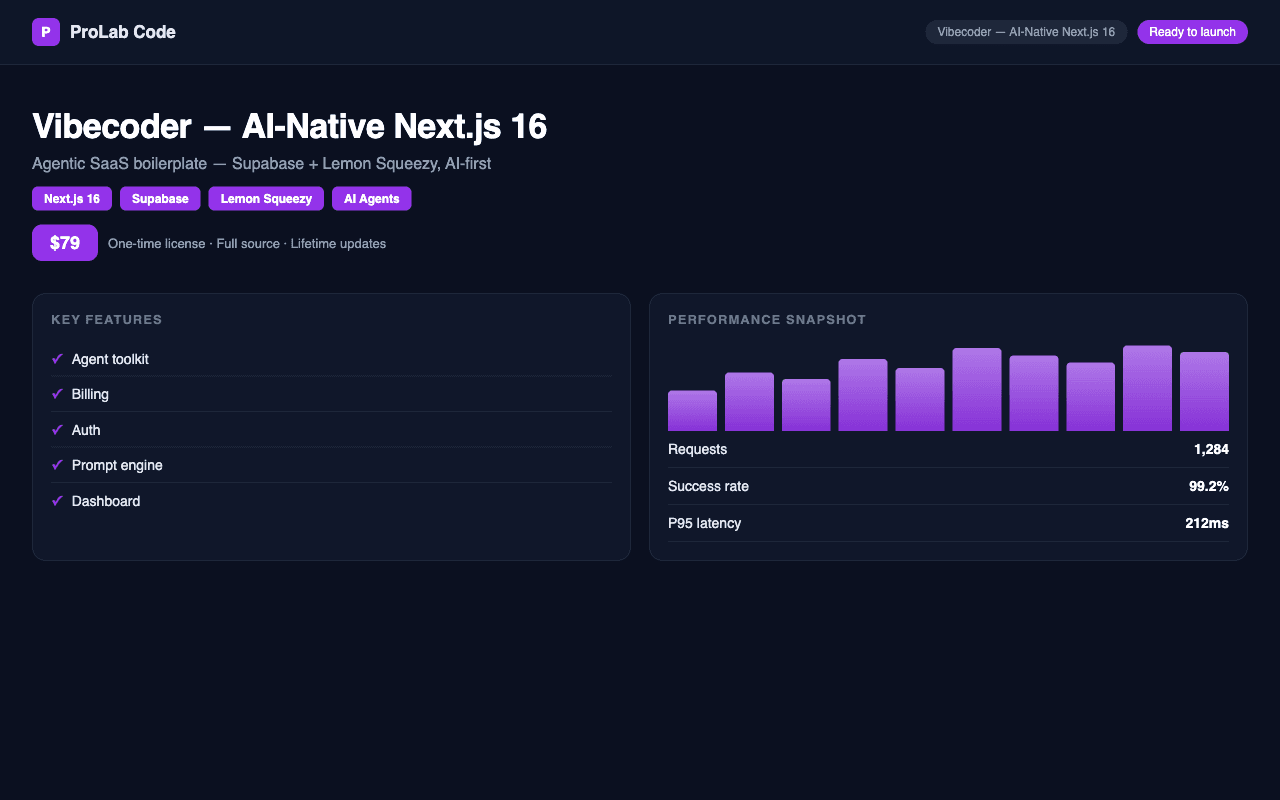
by PROLAB® · Boilerplate
ReactNext.jsTypeScriptSupabase+1
$79
Picking Stripe for next.js boilerplates
The best Next.js boilerplates in 2026 are built for the App Router (not Pages Router) with React Server Components, server actions, and route handlers. They use TypeScript with strict mode, Tailwind CSS for styling, and a working ESLint + Prettier config out of the box. Database options range from Prisma + PostgreSQL (most common) to Drizzle ORM or Supabase. Authentication is typically NextAuth v5 (Auth.js), Clerk, or Lucia. Look for boilerplates that include environment variable validation (usually Zod or t3-env), a pre-configured CI workflow, and a clear README with setup instructions. CodeCudos's quality analysis scores each listing on lint, security, dependencies, tests, and documentation — making it easy to compare boilerplates before you buy. For the Stripe subset specifically, the strongest listings target current Stripe versions, ship with TypeScript types where applicable, and document any framework-specific gotchas (deployment adapters, runtime requirements, etc.). Check the quality score and the listing's stack tags before buying — a "Stripe" tag confirms it works in the Stripe ecosystem natively.
Frequently asked questions
Why pick a Stripe-based next.js boilerplate?▾
Stripe is the most-traded stack on CodeCudos for next.js boilerplates. Picking a Stripe-based listing means the code drops into your existing Stripe project without framework-level rewrites — and the ecosystem of complementary libraries (auth, payments, ORM) is mature and well-documented.
App Router or Pages Router?▾
App Router for all new projects in 2026. Pages Router boilerplates are legacy — avoid them unless you have a specific compatibility requirement. Check the file structure: App Router projects have an 'app/' directory, not a 'pages/' directory.
What should a Next.js boilerplate include at minimum?▾
TypeScript, ESLint/Prettier, Tailwind CSS, authentication (NextAuth or Clerk), a database ORM (Prisma or Drizzle), environment variable validation, and deployment config for Vercel. Everything else is optional.
Are webhooks handled securely?▾
Quality listings verify Stripe webhook signatures on every event. If the listing doesn't show stripe.webhooks.constructEvent, treat it as insecure.
How does the 14-day refund work?▾
Request a refund within 14 days from your dashboard. We'll approve refunds when the code doesn't match the listing description or has critical bugs that prevent normal use.