

Stripe next.js saas templates
A Next.js SaaS template eliminates 4–8 weeks of plumbing — auth flows, Stripe webhooks, database schema, and transactional emails — so you focus on your unique product logic from day one. Filtered to Stripe listings only — 6 match. Stripe listings handle the payments plumbing — checkout, subscriptions, customer portal, and webhook verification — so you can charge users on day one.
6 quality-scored listings.

by Milvydas1 · Boilerplate
Next.jsTypeScriptTailwind CSSPrisma+1
$99


by CodeCudos Demo · Boilerplate
Next.jsTypeScriptTailwind CSSPrisma+2
$89
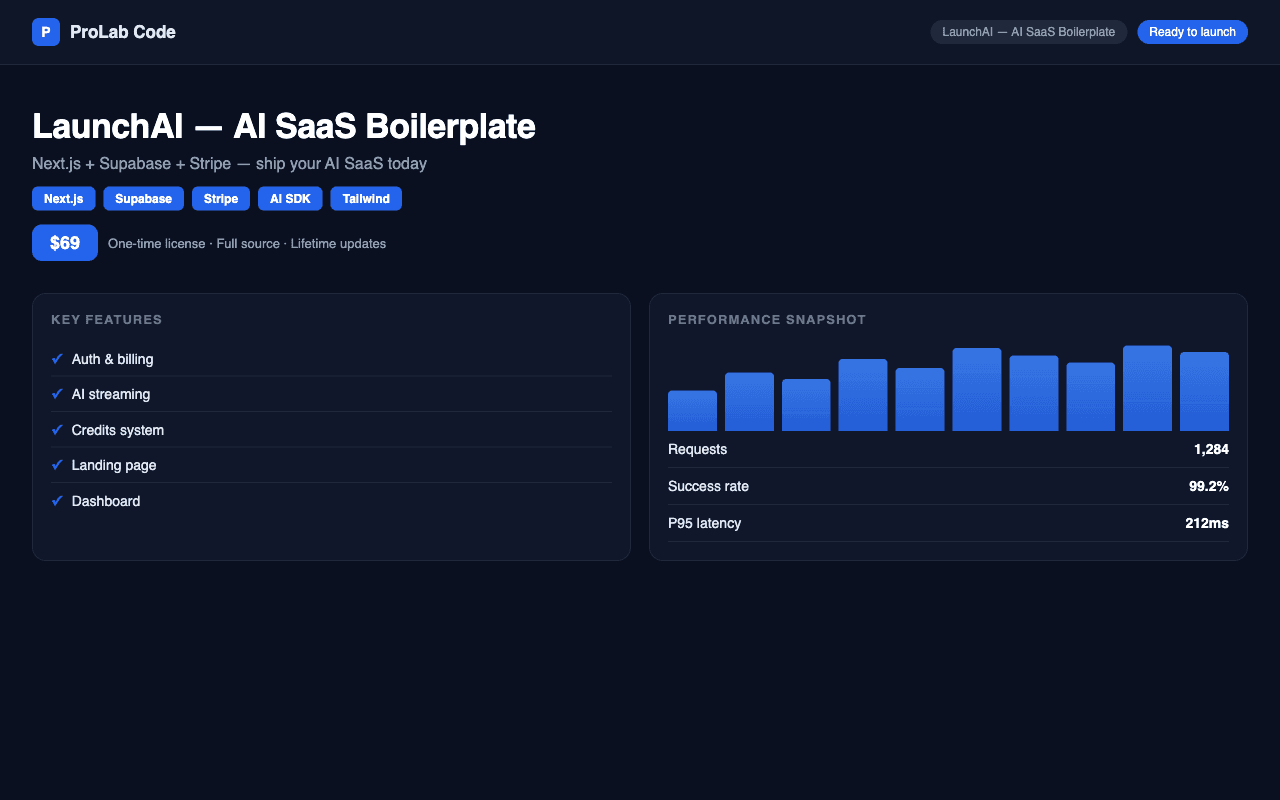
B89
by PROLAB® · Full App
OpenAIReactNext.jsTypeScript+2
$69
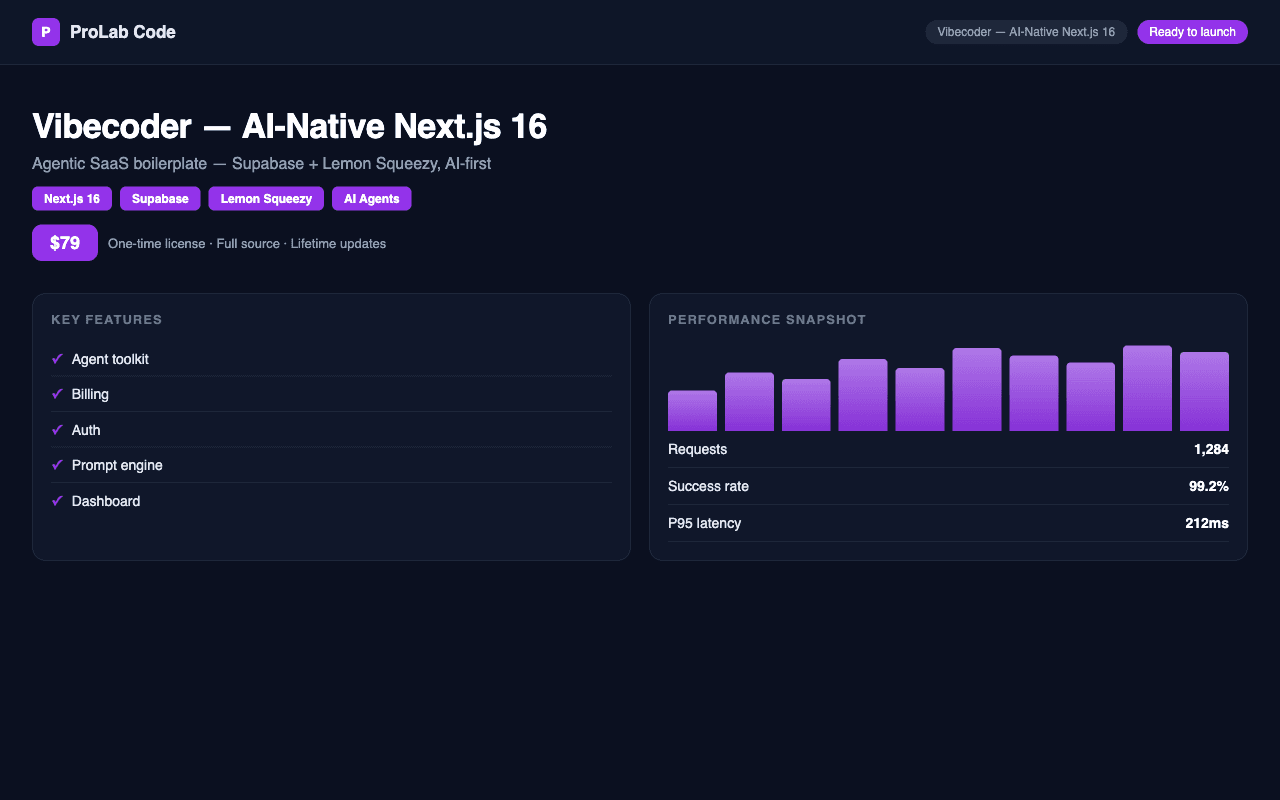
B88
by PROLAB® · Boilerplate
ReactNext.jsTypeScriptSupabase+1
$79
Picking Stripe for next.js saas templates
The best Next.js SaaS templates on CodeCudos are built on Next.js 14/15 App Router with server actions, TypeScript throughout, Prisma + PostgreSQL or Supabase for the database layer, and NextAuth or Auth.js for authentication. Stripe integration should include Checkout, webhooks with signature verification, customer portal, and subscription status synced to your DB. Check that the template ships with a working local dev setup (including a running database), a clear onboarding README, and at least basic test coverage. Avoid templates that rely on deprecated Pages Router patterns or have Stripe webhooks wired incorrectly — CodeCudos's quality scan flags these before the listing goes live. Typical time from purchase to first deploy: 1–3 days. For the Stripe subset specifically, the strongest listings target current Stripe versions, ship with TypeScript types where applicable, and document any framework-specific gotchas (deployment adapters, runtime requirements, etc.). Check the quality score and the listing's stack tags before buying — a "Stripe" tag confirms it works in the Stripe ecosystem natively.
Frequently asked questions
Why pick a Stripe-based next.js saas template?▾
Stripe is the most-traded stack on CodeCudos for next.js saas templates. Picking a Stripe-based listing means the code drops into your existing Stripe project without framework-level rewrites — and the ecosystem of complementary libraries (auth, payments, ORM) is mature and well-documented.
What's the difference between a Next.js SaaS template and a boilerplate?▾
The terms are used interchangeably. A template typically implies more UI included (landing page, dashboard, pricing page). A boilerplate implies a more minimal foundation. Both should handle auth, billing, and database out of the box.
Do Next.js SaaS templates include multi-tenancy?▾
Some do, most don't. Look for terms like 'organizations', 'workspaces', or 'teams' in the listing description. True multi-tenancy requires tenant-scoped data queries — not just a teamId column.
Are webhooks handled securely?▾
Quality listings verify Stripe webhook signatures on every event. If the listing doesn't show stripe.webhooks.constructEvent, treat it as insecure.
How does the 14-day refund work?▾
Request a refund within 14 days from your dashboard. We'll approve refunds when the code doesn't match the listing description or has critical bugs that prevent normal use.